
From Sandbags to Smart Barriers: The Tech Evolution in Flood Protection
- Sep 8, 2025
- 2 min read
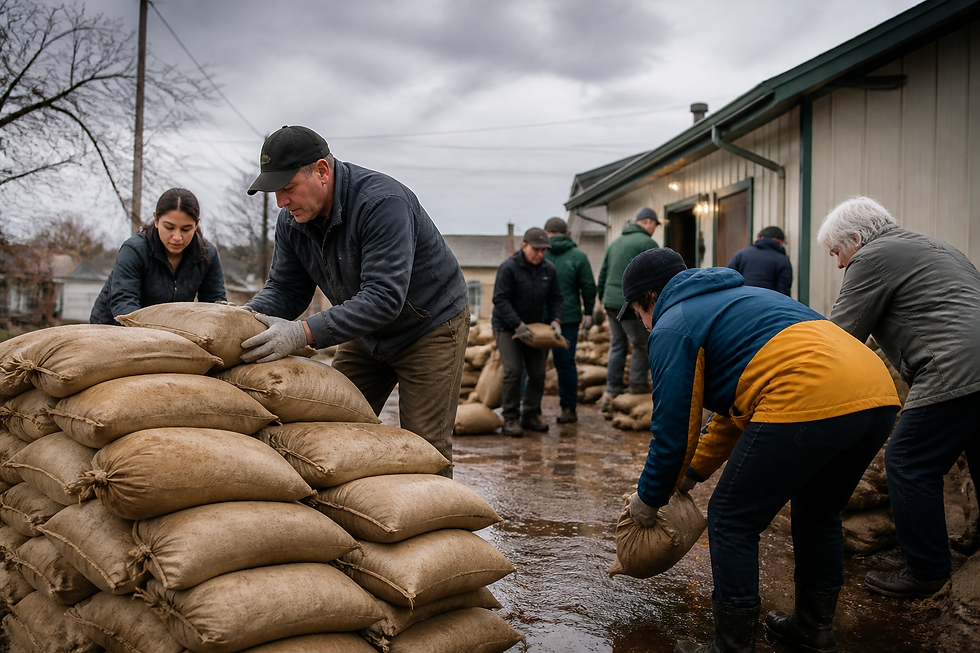
The problem with sandbags is not history. It is repeatability.
Sandbags remain familiar because they are simple, visible and widely understood. In an emergency, they can play a useful role. But for a commercial or critical facility facing a serious flood exposure, they often create a difficult operating problem: they require substantial labor, take time to place, are hard to standardize across wide openings and leave the team with a large recovery and disposal task afterward.
The evolution of flood protection is therefore not about declaring older methods obsolete. It is about giving facilities more reliable choices when the consequence of failure is high.
From emergency material to engineered system
Modern deployable barriers use modular components, defined connections and designed interfaces to create a repeatable protection line. The goal is to reduce improvisation.
Instead of sourcing, filling and placing thousands of bags as water approaches, a trained team can deploy an engineered system configured for the site. The system can be stored in an accessible location, checked between events and used again when conditions require it.
That shift matters most at facilities that must keep operating. A hospital, water-treatment facility, port, warehouse or industrial site needs a response that respects access, safety and time. The system should not only hold water back; it should fit the way the organization functions.

What technology has improved
Faster, more predictable deployment
Modular systems are designed around repeatable assembly rather than an open-ended material-handling effort. That gives teams a clearer basis for training and planning.
Better compatibility with operating sites
Deployable barriers can protect wide openings and perimeters while remaining stored during normal conditions. This helps facilities preserve circulation, access and site appearance when there is no flood threat.
More disciplined evaluation
Engineering, testing and relevant standards provide a stronger framework for discussing what a system is intended to do. They do not eliminate the need for site-specific assessment, but they improve the quality of the decision.
Reusability and readiness
An engineered system can be inspected, maintained and returned to storage after an event. The work does not end with deployment; it becomes part of a continuing readiness program.
The technology is only as good as the plan
No barrier becomes “smart” merely because it is modern. The real intelligence is in the complete system: identifying the right openings, establishing a deployment trigger, maintaining components, training the team and reviewing performance after use.
The U.S. Army Corps of Engineers frames temporary protection alongside emergency preparedness and planning. That is the right standard. Technology should make a facility more prepared, not encourage false confidence.
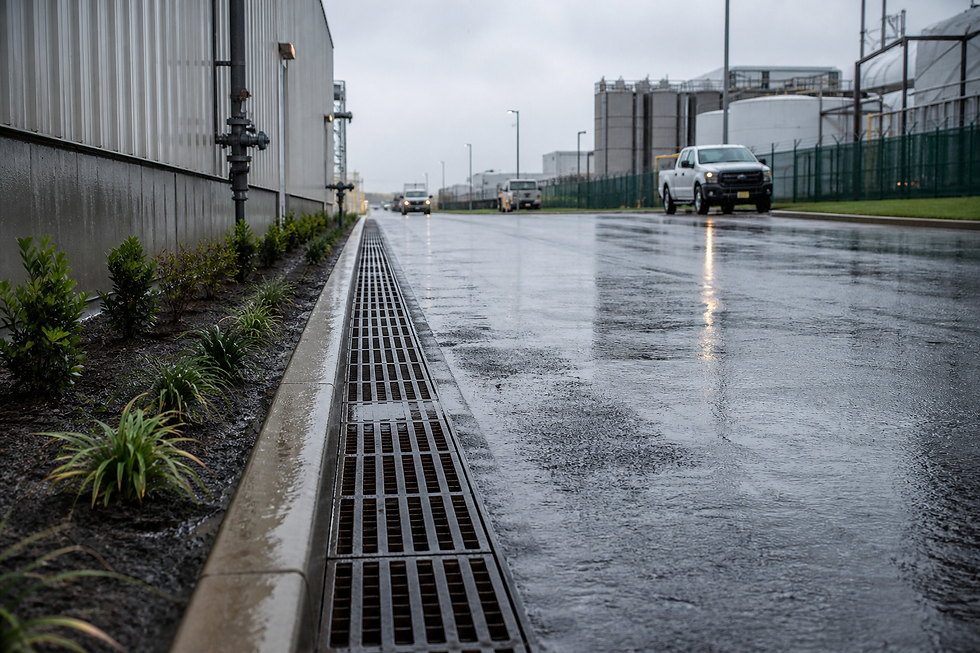
Choose the method that fits the consequence
For modest, short-term needs, traditional measures may still have a place. For a facility where water could interrupt critical operations, damage high-value equipment or cut off essential access, it is worth evaluating a more engineered approach.
The decision should consider the hazard, the opening or perimeter, available warning time, site conditions, staffing and the operational consequence of failure. AquaFence works with project teams to make that assessment practical and site-specific.
Explore AquaFence FloodWall and FloodBarricade systems for a reusable, deployable approach to facility flood protection.
---
Sources for publication
[U.S. Army Corps of Engineers: Temporary Flood Protection](https://www.usace.army.mil/Missions/Civil-Works/Flood-and-Coastal-Storm-Risk-Management/Flood-Hazard/Temporary-Flood-Protection/)
[FEMA P-936: Floodproofing Non-Residential Buildings](https://www.fema.gov/sites/default/files/2020-07/fema_p-936_floodproofing_non-residential_buiildings_110618pdf.pdf)


